
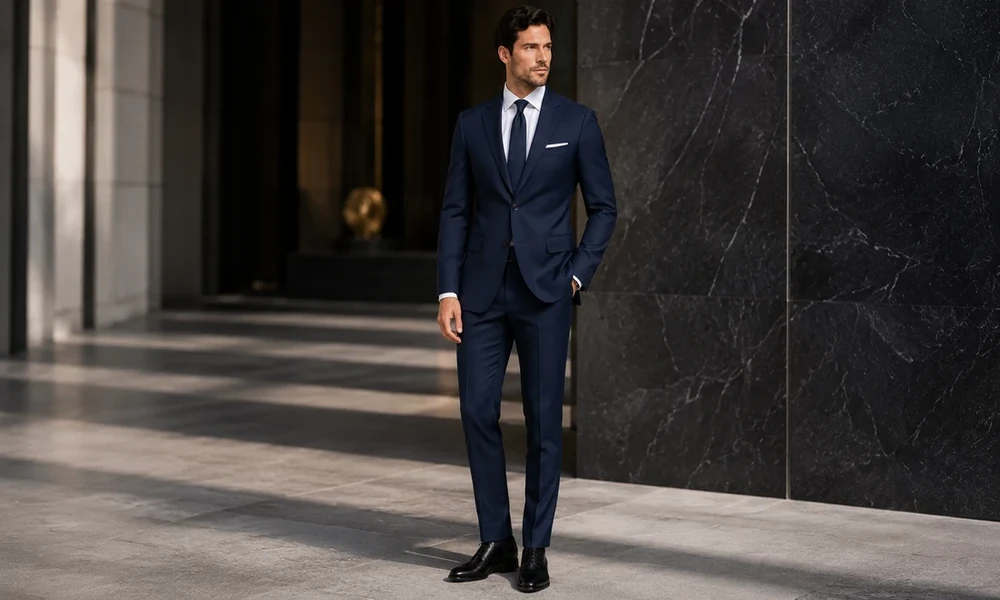
Two suits can carry the same size label and feel completely different. One pulls across the thighs. Another leaves extra fabric around the waist. Often, the difference comes down to the cut.
Slim, modern, and classic fits describe how a suit sits around the body. They are useful starting points, but they are not universal sizing standards. For readers exploring Grooms Club, the best choice begins with understanding those differences and checking how each suit feels in motion.
Slim Fit: A Closer, More Defined Shape
A slim fit suit generally has a shaped jacket waist, narrower sleeves, and trousers that taper through the leg. The result is a close silhouette with less excess fabric.
It can appeal to anyone who prefers a neat, contemporary outline. However, slim should never mean strained. A jacket that pulls into an X around the fastening button, or trousers that grip the thighs when sitting, needs another size or cut.
Body shape matters more than age. Someone with broader shoulders or muscular legs may find one brand’s slim fit comfortable and another restrictive. Try the complete suit before deciding that the label is right or wrong for you.
Modern Fit: Shape With More Breathing Room
Modern fit usually sits between slim and classic. Expect some definition at the waist and a relatively clean trouser line, with more room than a comparable slim cut.
It is a useful starting point for someone who wants a tailored appearance without a particularly close fit. For weddings, office days and dinners, that balance can make dressing easier.
Still, “modern” is a retailer’s description, not a fixed measurement. Compare the chest, waist, seat and thigh measurements where available. If the jacket fits well but the trousers do not, ask whether separates are available rather than accepting an uncomfortable compromise.
Classic Fit: Room Without Losing Structure
Classic fit generally provides more ease through the chest, waist, seat and thighs. Trousers often have a straighter leg, while the jacket follows a less sharply tapered outline.
This cut can suit someone who values movement, prefers traditional proportions, or spends much of the day seated. It is not reserved for a particular age or body type.
Roomy should still look intentional. Shoulders that extend awkwardly, sleeves that swallow the hands, and trousers that pool around the shoes suggest sizing or alteration issues. A well-fitted classic suit can look composed and precise without sitting close to every contour.
Compare the Three Fits at a Glance
FitTypical shapeMain consideration
Slim Closer jacket and tapered trousers Check for pulling and restricted movement
Modern Moderate shaping with additional ease Compare measurements across brands
Classic Fuller jacket and straighter trousers Keep length and proportions controlled
These are general tendencies. Fabric, construction and the individual pattern can change how each cut looks and feels.
Check the Fit Beyond the Label
Start with the shoulders and collar. The jacket should sit cleanly, without obvious overhang, bunching, or a gap behind the neck. GQ’s advice on how a suit should fit highlights shoulder alignment as a key consideration when buying.
Then fasten the jacket’s intended closure button while standing naturally. The lapels should lie smoothly. Sit down with the jacket unbuttoned, walk a few steps, and reach forward gently. Check that the trousers remain comfortable around the waist, seat and thighs.
Wear the shirt and shoes planned for the occasion. Both help reveal whether sleeve length and trouser length work with the finished outfit. Ask a tailor which adjustments are realistic before purchasing; extensive structural changes may make another suit a better starting point.
Balance Fit With Long-Term Value
A low price means little if the suit stays in the wardrobe. Anyone searching for an affordable mens suit should consider the purchase price alongside alterations, likely use, and upkeep.
Read the garment’s cleaning instructions before buying. The Federal Trade Commission’s guidance on clothing care labels explains their role in identifying suitable care methods. Maintenance belongs in the budget alongside the suit itself.
Choose the Suit That Works for You
Start with slim for a closer outline, modern for moderate shaping, or classic for greater ease. Then let the fitting decide. A suit should support the day ahead, whether that means sitting through meetings or celebrating a wedding.
Explore Grooms Club with your occasion, preferred silhouette, and full budget in mind, and choose the fit that feels comfortable as well as looks sharp.
