
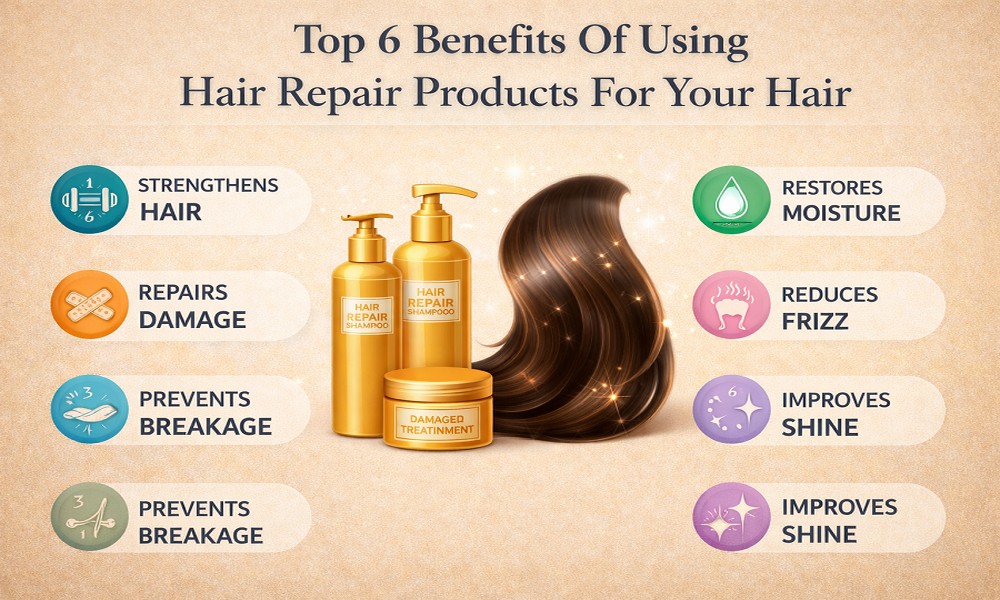
Heat styling, coloring, tight ponytails, sun exposure: You love doing these, yet your hair often suffers. Over time, the damage shows up. Dry ends, breakage, frizz, and dullness are common. This is where hair repair products step in.
But what do they actually do? Are they just heavy conditioners? Or something more? Let’s break it down.
1. They Rebuild Broken Hair Bonds
Inside each strand are tiny bonds holding the structure together. These are called disulfide bonds. Bleaching, chemical treatments, and heat tools break them. Certain top hair repair products use bond-building technology. Some contain peptides. Others use advanced bonding agents.
What does that mean for you?
- Stronger strands
- Less snapping while brushing
- Better elasticity
Research from professional hair labs shows that structured bond systems can reduce breakage significantly when used consistently. Think of it like repairing cracks in a wall before repainting. If the structure isn’t fixed, surface shine won’t last.
2. They Reduce Breakage And Split Ends
Can any product permanently “heal” split ends? No. But hair repair products can slow the damage down. They seal the cuticle, smooth rough edges, and add flexibility to brittle strands. This helps prevent splits from traveling upward.
Result? You retain length longer between trims.
|
Problem |
How Repair Products Help |
|
Split ends |
Seal and reinforce the shaft |
|
Snapping while brushing |
Improve elasticity |
|
Rough texture |
Smooth cuticle layer |
Less breakage = longer-looking hair.
3. They Restore Moisture Balance
Damaged hair struggles to hold moisture. That’s why it feels rough and frizzy. Many hair repair products include:
- Ceramides
- Niacinamide
- Plant proteins
- Moisture-binding ingredients
These work by reinforcing the outer layer of the hair shaft. The result? Softer texture, easier detangling, and better shine. Plus, there is less friction while styling. Hair that holds moisture behaves better.
4. They Protect Against Future Damage
Repair isn’t just about fixing the past. Quality hair repair products also create a protective barrier. Especially important if you:
- Use heat tools
- Color your hair
- Spend time in the sun
Many modern formulas include heat protection up to 230°C (450°F). That means:
- Less protein breakdown
- Less cuticle lifting
- Less long-term weakening
If you’re investing in styling, protection should come with it. Repair and defense should work together.
5. They Support Scalp Health
Healthy hair doesn’t start at the ends. It starts at the scalp. Some advanced hair repair products now include scalp-support ingredients like peptides, anti-inflammatory compounds, and barrier-supporting actives.
Why does this matter?
Scalp irritation can increase shedding, slow healthy growth, and create weak new strands. When the scalp is calm and balanced, hair grows stronger from the root.
6. They Improve Overall Hair Texture And Strength
Here’s what many people notice first:
- Smoother feel
- More shine
- Less frizz
- Better manageability
That’s because hair repair products smooth the cuticle and improve strand alignment.
When the cuticle lies flat:
- Light reflects better
- Hair looks shinier
- Tangling reduces
Over time, consistent use can help slightly to moderately damaged hair regain flexibility and strength. It won’t reverse severe structural damage overnight. But it can significantly improve how your hair behaves daily.
Who Should Use Hair Repair Products?
You’ll benefit if you:
- Color or bleach your hair
- Use straighteners or curling irons
- Notice breakage while brushing
- Feel dryness at the ends
- Want to grow your hair longer
Even healthy hair can benefit from preventive repair care. Choosing from the top hair repair products on the market means looking for:
- Bond-building ingredients
- Protein balance (not overload)
- Moisture + strength combination
- Heat protection if you style
Quick Recap: The 6 Core Benefits
|
Benefit |
Why It Matters |
|
Bond rebuilding |
Strengthens internal structure |
|
Reduced breakage |
Helps retain length |
|
Moisture restoration |
Improves softness and shine |
|
Heat protection |
Prevents future damage |
|
Scalp support |
Encourages stronger growth |
|
Texture improvement |
Better manageability |
Conclusion
Hair damage happens slowly. Repair happens slowly, too. The key with hair repair products is consistency. Not overuse. Not random switching.
Pair them with gentle washing, heat moderation, and regular trims every 6-8 weeks. Repair works best as part of a routine. Your hair doesn’t need miracles. It needs structure, moisture, and protection.
